
Curtis Michael Gorlich
Founder & Principal Consultant, Coastal Roofing Advisors, LLC
Curtis Michael Gorlich is the Founder and Principal Consultant of Coastal Roofing Advisors (CRA), a forensic building-envelope consulting firm specializing in evidence-based property evaluations, structural risk identification, and code-driven asset analysis.
After decades spent within the construction and building-envelope industries, Curtis established CRA in response to a recurring industry problem: critical building conditions are too often evaluated through incomplete inspections, template-driven reporting, or financially misaligned incentives. CRA was created to provide clients with an independent, field-verified understanding of actual asset condition and exposure.
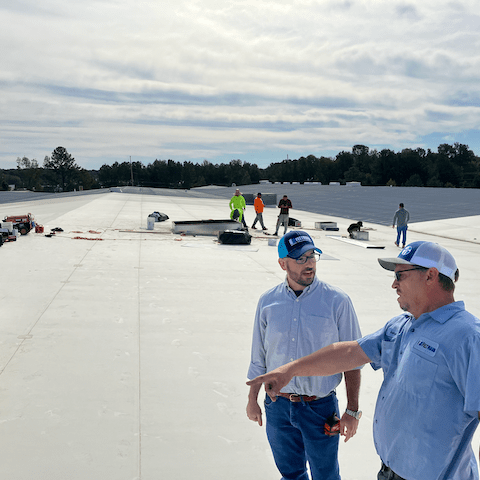
Curtis’s methodology is rooted in comprehensive site-data acquisition and forensic documentation. Each evaluation incorporates high-resolution thermal imaging, moisture-intrusion analysis, calibrated field instrumentation, photographic evidence collection, and jurisdiction-specific code analysis designed to support technically defensible findings.
His work focuses on the intersection of physical evidence, building science, and regulatory compliance. By cross-referencing observable field conditions with applicable IBC, IECC, manufacturer specifications, and local code requirements, Curtis provides ownership groups, commercial stakeholders, and property decision-makers with actionable clarity regarding building-envelope performance, latent deficiencies, and capital exposure.
Unlike traditional contractor-driven models, CRA does not operate from an installation-first mindset. The firm’s role is to provide objective forensic insight grounded in observable conditions, documented evidence, and code-supported analysis.
When not conducting field investigations or preparing forensic reports, Curtis spends time with his two children and continues advancing CRA’s mission of raising the standard for independent building-envelope evaluation and asset intelligence.
Specialized Domain Proficiencies
Curtis’s forensic methodology is rooted in advanced pattern recognition, systems-level analysis, sustained hyperfocus, and high-volume information synthesis developed through neurodivergent cognition associated with ASD1 and ADHD. Within building-envelope forensics, these traits translate into measurable operational advantages including accelerated anomaly detection, multi-system correlation, long-duration investigative endurance, and the ability to identify latent code, moisture, thermal, and structural relationships often overlooked during conventional evaluations. The result is a field methodology capable of converting fragmented site conditions into technically defensible asset intelligence, capital exposure analysis, and code-supported recovery strategy. At CRA, neurodivergence is not framed as limitation. It is treated as a functional analytical advantage within high-complexity forensic environments where precision, pattern recognition, and sustained investigative depth directly impact client outcomes.